Why Swiss
When a conventional lathe is the wrong tool
Long, thin parts deflect. On a conventional lathe, the cutting force pushes the workpiece away from the tool, and the result is taper, chatter or a dimension that drifts along the length. Swiss-type machines solve this by moving the stock through a guide bushing, so the tool always works right next to the support.
That makes Swiss machining the right choice for small-diameter parts with a high length-to-diameter ratio, and for parts that combine turning, milling, drilling and cross-holes in one cycle.
- Small diameter with long L/D
- Tight concentricity and roundness
- Cross-holes, slots and flats in one setup
- Short cycle times at volume
- Good surface finish on slender parts
- Less material waste than bar-fed alternatives
Process fit
Swiss machining compared with conventional turning
| Consideration | Swiss-type | Conventional lathe |
|---|---|---|
| Slender parts | Guide bushing supports the cut; minimal deflection | Part can deflect, especially at long L/D |
| Setup | More complex, better suited to repeat work | Simple and fast for short runs |
| Features | Turning, milling, drilling and cross-work in one cycle | Often needs a second operation |
| Best for | Small precision parts at repeat volume | Larger diameters and simple turned parts |
Materials
Materials and part types
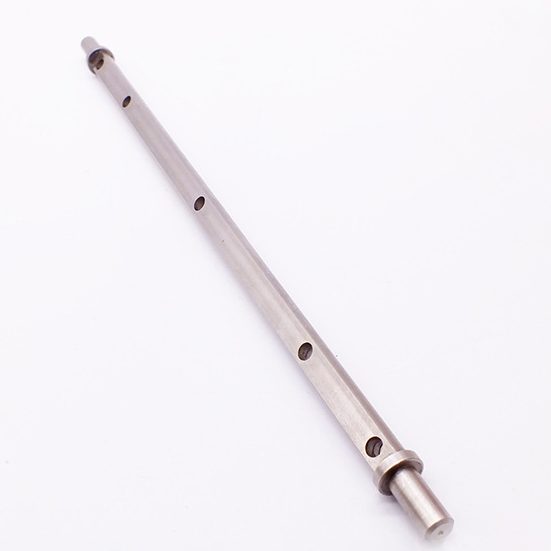
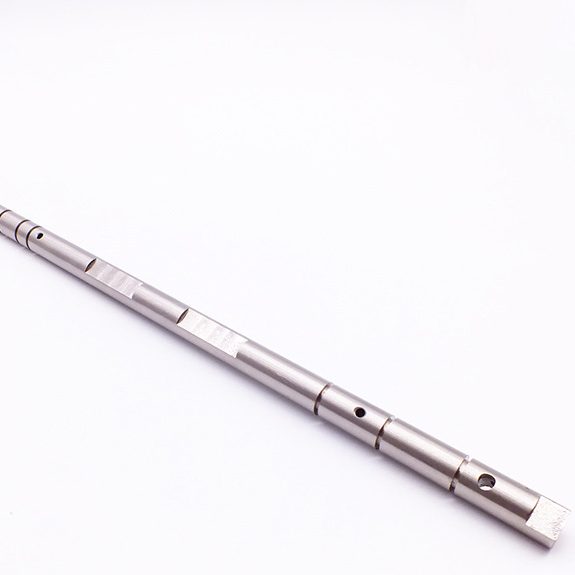
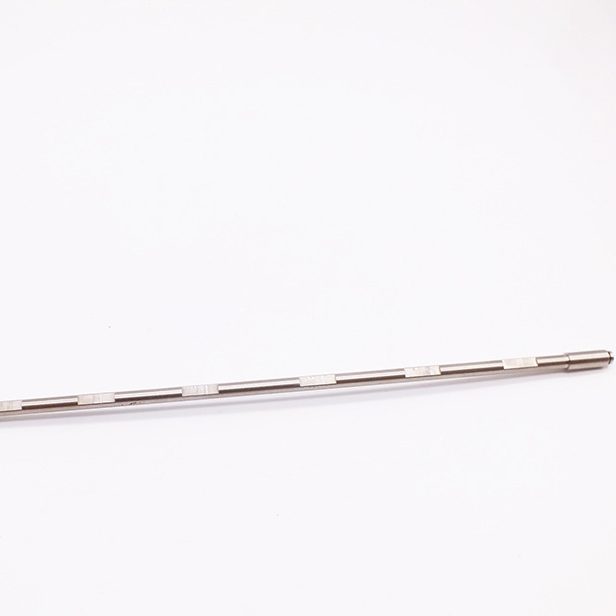
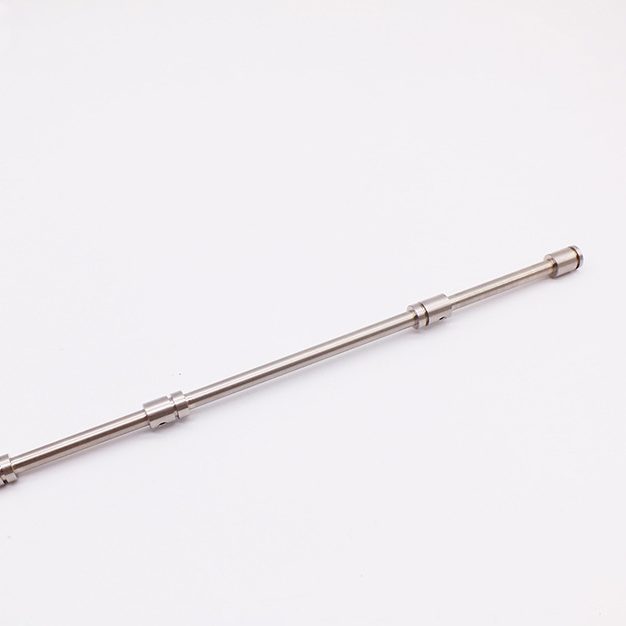
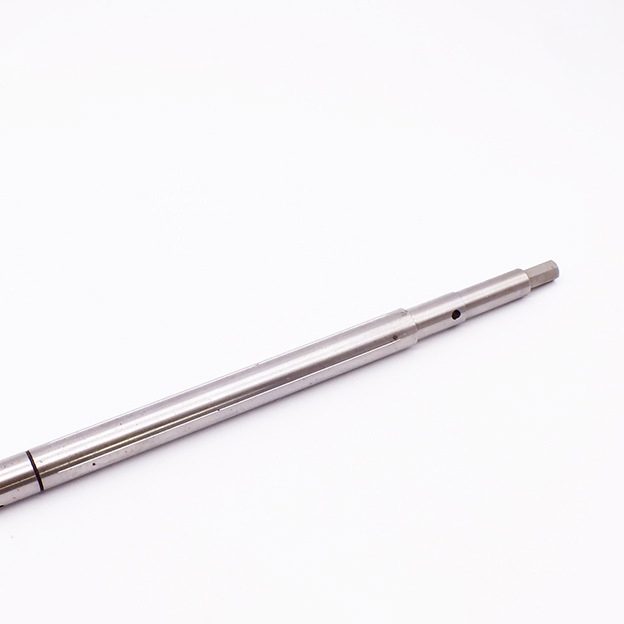
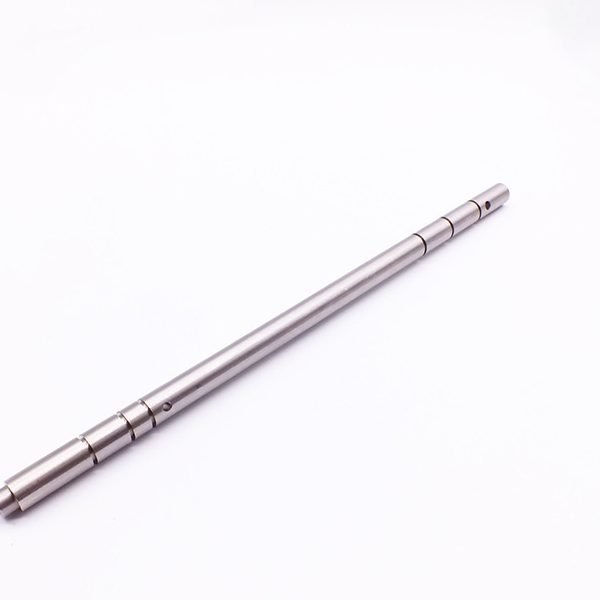
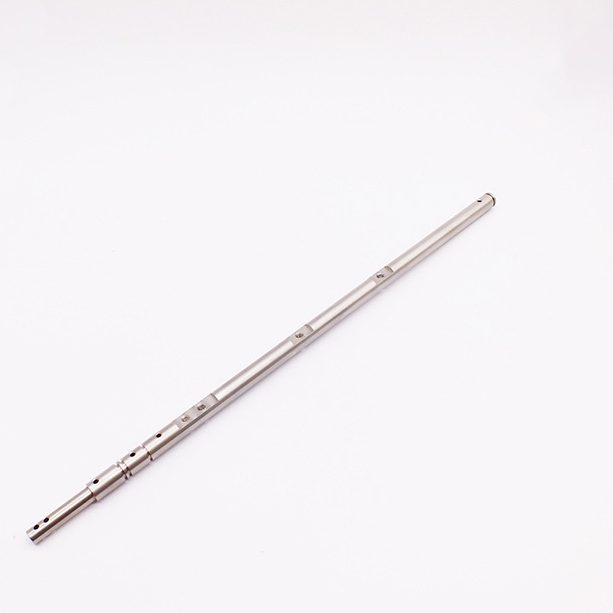
We machine stainless steel, titanium, brass, aluminum and engineering plastics on Swiss-type equipment. Typical parts include connectors, pins, small fittings, sensor housings and slender shafts used in automation, instruments and fluid systems.
If your part is small but simple, a conventional lathe may be cheaper. We will quote the process that makes sense rather than the one we prefer to run.
Design guidance
Design details that matter on Swiss parts
Because the part is supported at the guide bushing, the distance from the bushing to the feature affects accuracy. Deep grooves, long unsupported sections and sharp transitions are the usual culprits when a part is difficult to hold.
Send the drawing and we will tell you which features need a second operation, a different bar size or a small geometry change.
- Keep unsupported length short
- Use generous fillets at diameter changes
- Specify threads with standard pitches
- Avoid deep, narrow grooves
- Consider a second operation for large flats
- Agree the deburring standard up front
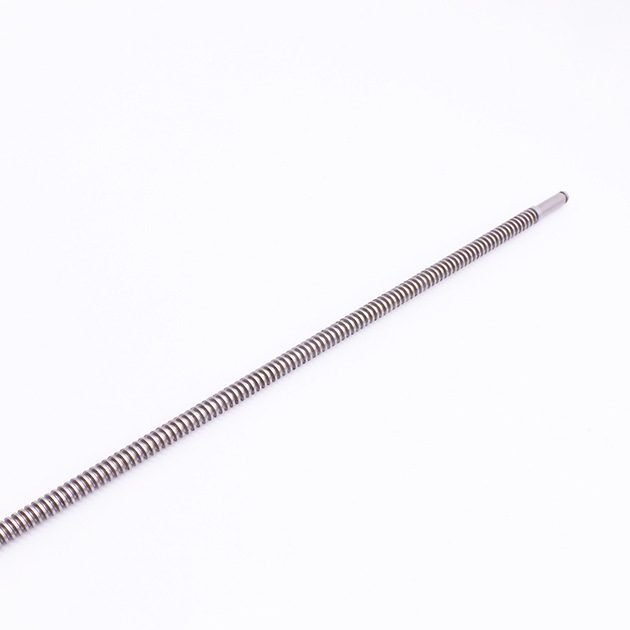
Swiss machined part examples




Quality
Inspection and deburring
Small parts fail on burrs and edge breaks more often than on nominal dimensions. We agree the deburring standard with the first article, check it visually and under magnification where needed, and pack parts so they do not damage each other in transit.